Some cookies used are essential to providing a service, while others help us improve your experience and provide us with insights into how the site is being used.
For more detailed information about the cookies we use, see our Cookies page.
Necessary cookies enable core functionality such as security, network management, and accessibility. You may disable these by changing your browser settings, but this may affect how the website functions.
We'd like to set Google Analytics cookies to help us to improve our website by collecting and reporting information on how you use it. The cookies collect information in a way that does not directly identify anyone. For more information on how these cookies work, please see our 'Cookies page'.
We'd like to allow Social Media cookies to provide a richer experience. These cookies will allow us the ability to list Fife Council tweets and Facebook posts, Google maps, audio clips & Videos on some of our pages. Our videos use Youtube's privacy-enhanced mode.
These cookies allow us to show relevant adverts to the content you are viewing. They also provide the ability to deliver targeted online advertising across other platforms like Facebook, Google, Instagram and the Quantcast network.
Fife's rivers are at the heart of a healthy, resilient environment. They support a rich diversity of wildlife, providing food, breeding grounds and shelter for species such as trout, otters, beavers, kingfisher and heron.
Beyond their ecological importance, rivers play a key role in managing flood risk. They provide natural pathways for water to flow, while surrounding flood plains and wetlands can slow and store excess water. As climate change leads to more frequent and intense rainfall, river systems play a pivotal role in minimising flood risk and supporting climate resilience.
By protecting and restoring rivers and their natural features, we can help create thriving ecosystems, support biodiversity, reduce flooding, and build a more climate-resilient future for Fife.
River restoration improves habitats for wildlife, supporting key species. It can also help to make watercourses more resilient to the impacts of flooding and drought.
Read more about the individual restoration projects across Fife below.
The River Leven and its tributaries are a vital part of the local landscape in Fife, as well as being great assets to the communities that live alongside them. They provide a wide range of benefits, including wildlife corridors, recreation opportunities, natural flood management, and access to outdoor space that has been proven to improve health and wellbeing.
Physical modifications, including narrowing and straightening of the river due to the area's industrial past has put significant environmental pressure on these waterways. The partnership has been working to restore over 2 miles of the River Leven, flowing from Cameron Bridge to Leven. Restoration works led by Fife Coast and Countryside Trust (FCCT) included the removal the Burnmill dam, and the construction of a nature-like rock ramp over the Kirkland dam to enable fish passage further upriver. This also helps to reduce the flow of water, decreasing the risk of flooding downstream.
Following the river restoration project, the River Park Programme was established to continue improving the greenspaces surrounding the Leven and provide outdoor learning and training opportunities for the local community.
Source-to-sea restoration efforts of the River Eden are being led by the River Eden Sustainability Partnership. The project aims to see a restored river corridor, rich in biodiversity, free from invasive non-native species, improving resilience to climate change and connected to the community for well-being and economic benefit.
The Cupar area has experienced several flood events in recent years, and one major benefit of this project is to enhance climate resilience through natural flood mitigation efforts to slow the water flow. Additionally, improving the river habitat through tree planting and other initiatives supports biodiversity and wider ecosystem health.
Rosyth is home to a network of freshwater habitats, in particular the Whinny and Brankholm Burns, which flow through Rosyth and out to Inverkeithing Bay. This project aims to restore these two degraded watercourses to make significant ecological improvements, enhance biodiversity, improve local greenspaces and expand the natural habitat of the burns.
In 2025, a feasibility study was conducted to identify potential opportunities for restoration and the barriers and challenges that might exist. The project has moved on to the design phase in 2026. This phase will involve community collaboration to ensure that local priorities are considered.
The Dreel Burn is the principal stream of the East Neuk of Fife; it is 11.8km in length and is tidal at its lowest reaches, alongside Dreel Halls in Anstruther. Once renowned for its wildlife, including kingfishers, the area has seen its water quality worsen over the years, resulting in a decline in biodiversity and habitat quality.
In 2022, Forth Rivers Trust began working with the Anstruther Improvements Association to create the Dreel Burn restoration project. The Dreel Burn restoration follows a vision of producing a clean, biodiverse and vibrant river, valued by the communities of the East Neuk. The project focuses on engaging local communities to recognise the value of protecting the Burn and to understand its contributions to the surrounding habitat.
The Dreel Burn Investment Readiness Partnership has been established, supported by FCCT, to identify potential investment that can support local landowners in improving nature and water in the catchment.
The Back Burn restoration project completed construction works in 2026, including major improvements made at Coul Den and Balbirnie Park. Restoration works included realigning the burn to its natural channel, creating rock ramps for fish passage, removing hard banking, and upgrading the path network. These improvements help reduce flood risk through natural flood management, improve resilience to climate change and support biodiversity.
In total, the project has removed 11 fish barriers, planted hundreds of trees, connected several kilometres of freshwater habitat and improved accessibility for the local community. A pair of otters have already been observed exploring the Back Burn since work was completed.
This project has been a collaboration between SEPA, Fife Council, FCCT, consultants CBEC Eco-Engineering, and contractors McGowan Environmental Engineering.
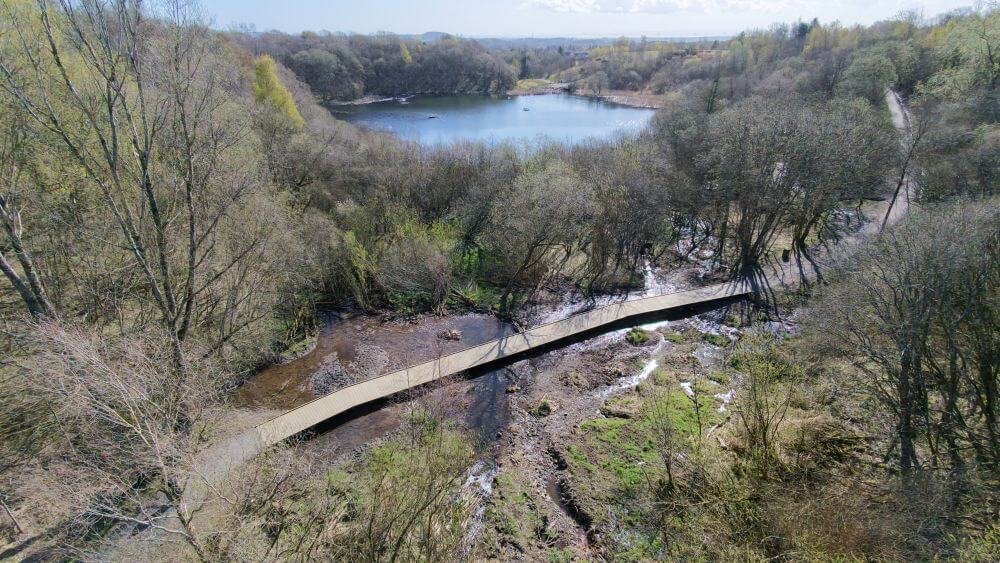
New boardwalk built at Back Burn - © Fife Coast and Countryside Trust
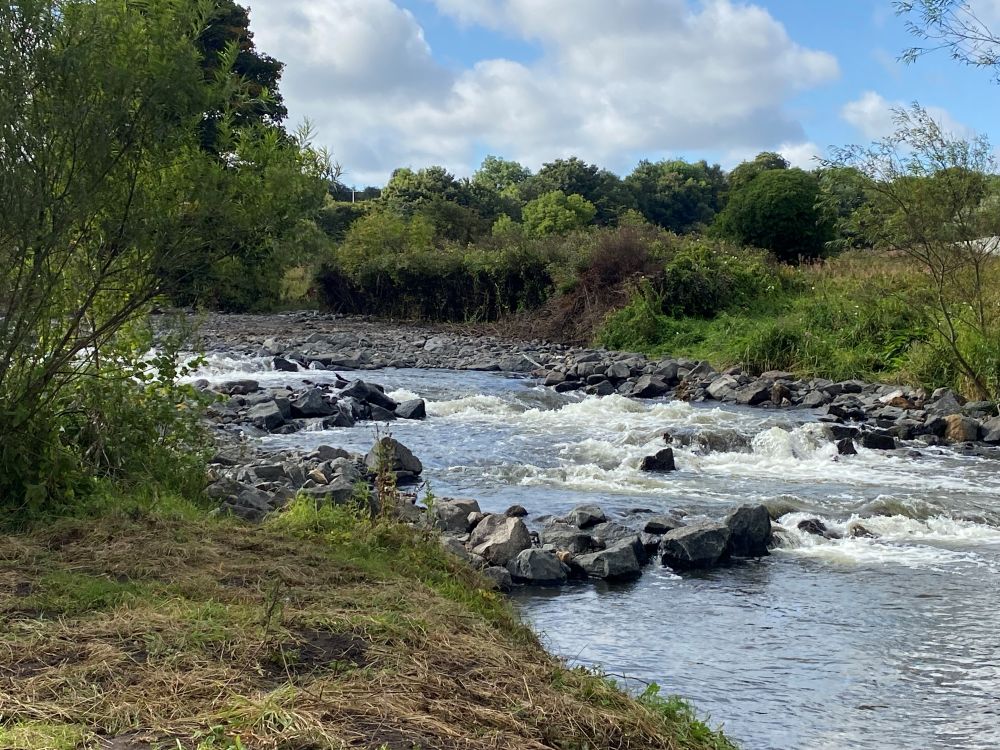
Kirkland rock ramp, River Leven - © Fife Coast and Countryside Trust
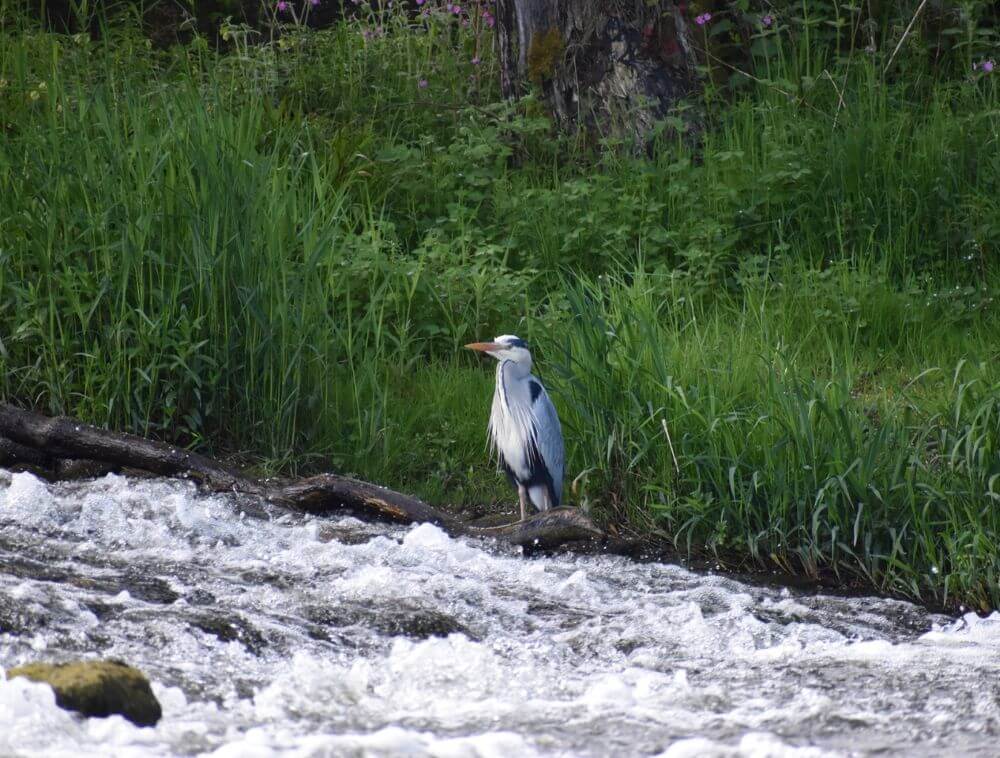
Heron on the River Leven at Kirkland Dam - © Marjory Wood, Fife Coast and Countryside Trust
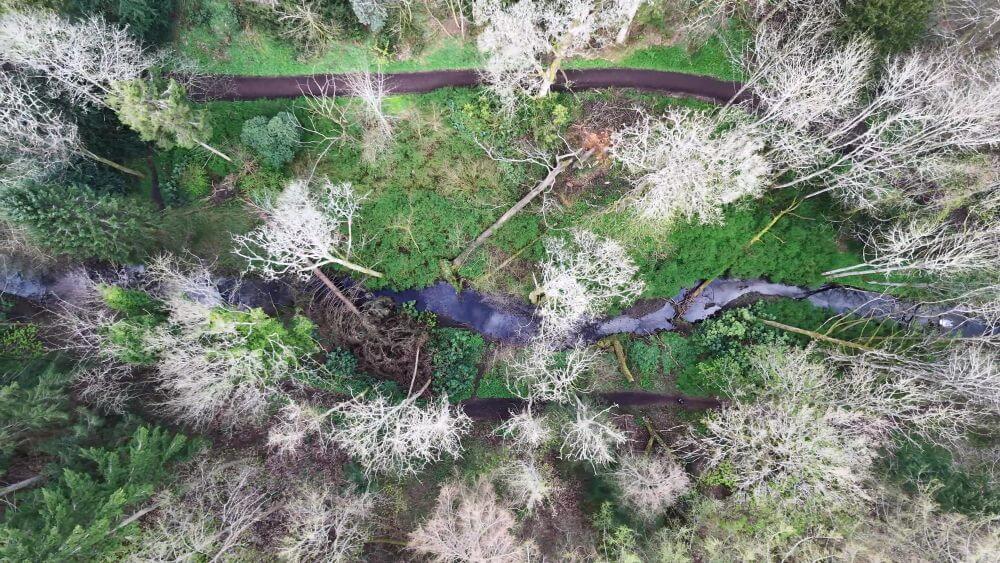
The Back Burn flowing through Balbirnie Park - © Fife Coast and Countryside Trust
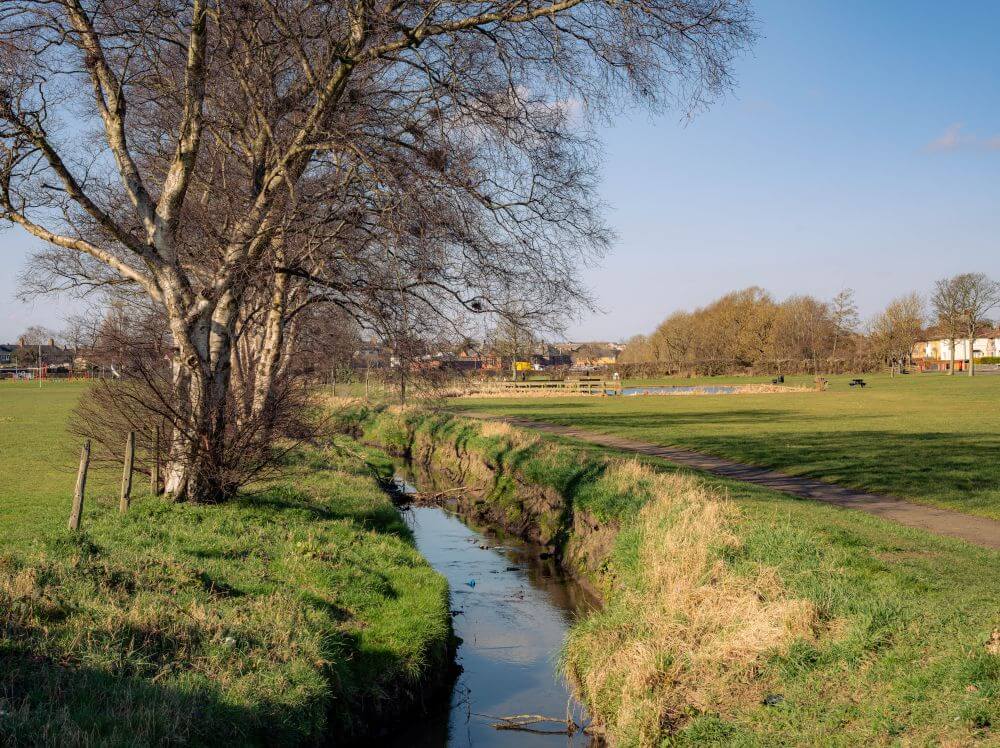
The Brankholm Burn in Rosyth Public Park - © Fife Coast and Countryside Trust
Rivers and wetland protection efforts extend into several wider nature and biodiversity projects currently underway.
Wetlands form a critical habitat within Fife Council's nature networks mapping. This project focuses on connecting existing habitats using wildlife corridors and “stepping stones”. Nature networks allow plants and animals to move between habitat areas, enhancing biodiversity and improving resilience. Efforts to restore and protect Fife’s rivers and wetlands support habitat connections and nature networks.
To find out more information about the nature networks project, including details specific to wetland habitats, visit Nature Networks.
The local biodiversity action plan identified freshwater & wetlands as one of six core ecosystems. The plan outlines Fife's priorities for nature conservation, written in collaboration with the Fife Biodiversity Partnership. It includes a number of key actions aimed at restoring, enhancing and protecting biodiversity across Fife.
To find out more information about the local biodiversity action plan, including details specific to freshwater and wetland ecosystems, please visit Fife's Local Biodiversity Action Plan.
Restoration work is underway across Fife involving several partner organisations, including: