Some cookies used are essential to providing a service, while others help us improve your experience and provide us with insights into how the site is being used.
For more detailed information about the cookies we use, see our Cookies page.
Necessary cookies enable core functionality such as security, network management, and accessibility. You may disable these by changing your browser settings, but this may affect how the website functions.
We'd like to set Google Analytics cookies to help us to improve our website by collecting and reporting information on how you use it. The cookies collect information in a way that does not directly identify anyone. For more information on how these cookies work, please see our 'Cookies page'.
We'd like to allow Social Media cookies to provide a richer experience. These cookies will allow us the ability to list Fife Council tweets and Facebook posts, Google maps, audio clips & Videos on some of our pages. Our videos use Youtube's privacy-enhanced mode.
These cookies allow us to show relevant adverts to the content you are viewing. They also provide the ability to deliver targeted online advertising across other platforms like Facebook, Google, Instagram and the Quantcast network.
During 2025/26, the Fife Violence Against Women Partnership supported an innovative partnership project bringing together Civic Digits, Dunfermline High School, Community Learning and Development and Dunfermline Athletic Football Club (DAFC) to explore the impact of online misogyny, manosphere content and incel culture on young people. The project sought to create safe spaces for discussion, encourage critical thinking and help young people better understand the influence that online content can have on attitudes, relationships and behaviour.
The project engaged almost all S2 pupils at Dunfermline High School, reaching approximately 225 young people through workshops designed to explore online influences, respectful relationships and positive masculinity. The sessions encouraged participants to reflect on the content they encounter online, discuss challenging topics openly and consider the impact that harmful narratives can have on individuals and communities. Workshops were also delivered for parents and carers, helping to raise awareness of emerging online influences and support informed conversations at home.
A smaller group of 15 young people took part in a series of focused workshops where they worked alongside partners to develop a creative response to the issues being explored. Through discussion, research and collaboration, the group co-wrote a play inspired by their experiences and perspectives. As part of the process, participants interviewed first-team players from Dunfermline Athletic Football Club, exploring the importance of positive male role models and the influence that individuals can have on shaping attitudes and behaviours.
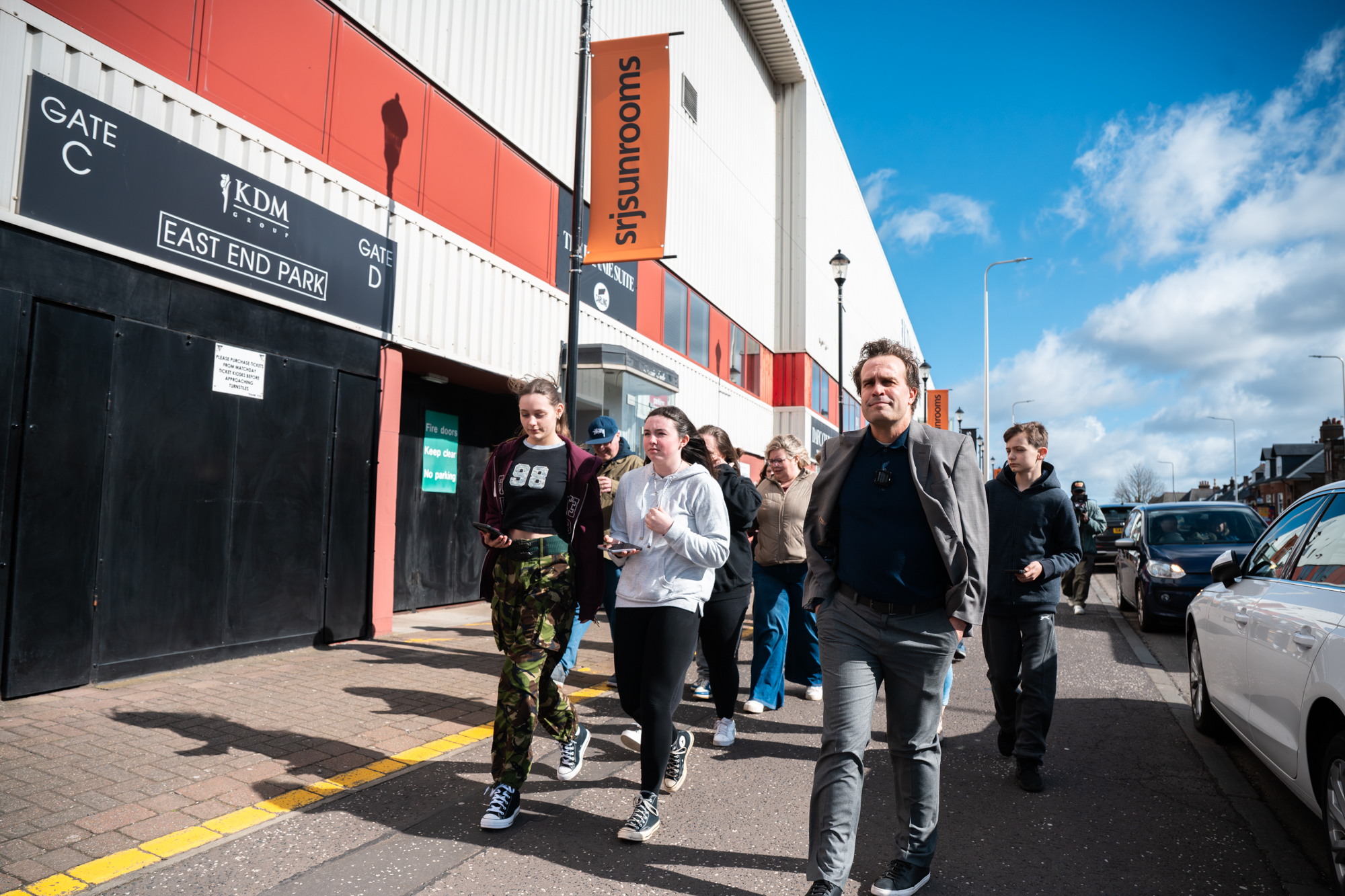
The young people's work formed the basis of Many Good Men, an interactive theatre production developed by Civic Digits and hosted by Dunfermline Athletic Football Club at East End Park. Audience members were invited to participate directly in the performance through digital voting, influencing the direction of the story and taking part in post-performance discussions about the choices, behaviours and circumstances that shaped the outcomes presented. This interactive approach encouraged reflection and dialogue, allowing audiences to consider how alternative decisions and positive influences might lead to different outcomes.
Between 30 March and 3 April 2026, ten performances were delivered. Seven performances were attended by the majority of the S2 cohort from Dunfermline High School, alongside additional young people from Fife College and Fife Gingerbread. Three public performances attracted a combined audience of more than 100 people, including community members, partner organisations, elected members and professionals working with young people.
The project delivered positive outcomes for participants and audiences alike. Young people reported increased confidence, particularly within the smaller co-production group, alongside improved ability to critically assess online content and discuss difficult issues. The process of creating and performing the production helped participants develop communication, teamwork and problem-solving skills while encouraging them to engage thoughtfully with complex social issues.
Some of the most significant impacts were seen among the young people who took active roles in the performance itself. For those involved in acting and presenting, the project created opportunities to build confidence, resilience and public speaking skills. Feedback from professionals and audience members provided meaningful recognition of their achievements, helping strengthen self-belief and encouraging further participation in creative and community-based opportunities.
The project also generated wider learning among audiences. Feedback demonstrated an increased awareness of online misogyny, the influence of online communities and the importance of positive male role models. Many audience members highlighted the value of creating spaces where these issues can be discussed openly and constructively, particularly with young people.
This work supports the Plan for Fife priority of Community Wealth Building and Leading Economic Recovery and contributes to ambitions around improving educational attainment, reducing preventable harm, strengthening community safety and increasing community involvement in shaping local conversations and solutions. By encouraging critical thinking, promoting positive relationships and creating opportunities for youth-led discussion, the project has helped build awareness of issues that can affect young people's wellbeing and future life choices.
Looking ahead, partners will continue to evaluate the impact of the project through further engagement with young people, school staff, parents and carers. There are plans to explore opportunities to secure funding that would allow the production to be shared more widely across Fife, helping to reach new audiences and continue important conversations around positive masculinity, online influence and respectful relationships. Partners are also exploring opportunities for ongoing youth participation, including the potential development of a youth forum that can help shape future awareness-raising activity and continue promoting positive messages within schools and communities.