Some cookies used are essential to providing a service, while others help us improve your experience and provide us with insights into how the site is being used.
For more detailed information about the cookies we use, see our Cookies page.
Necessary cookies enable core functionality such as security, network management, and accessibility. You may disable these by changing your browser settings, but this may affect how the website functions.
We'd like to set Google Analytics cookies to help us to improve our website by collecting and reporting information on how you use it. The cookies collect information in a way that does not directly identify anyone. For more information on how these cookies work, please see our 'Cookies page'.
We'd like to allow Social Media cookies to provide a richer experience. These cookies will allow us the ability to list Fife Council tweets and Facebook posts, Google maps, audio clips & Videos on some of our pages. Our videos use Youtube's privacy-enhanced mode.
These cookies allow us to show relevant adverts to the content you are viewing. They also provide the ability to deliver targeted online advertising across other platforms like Facebook, Google, Instagram and the Quantcast network.
During 2025/26, the Fife Violence Against Women Partnership (FVAWP) played a leading role in testing Scotland's new Violence Against Women and Girls (VAWG) Needs Assessment Tool. Developed as part of Scotland's Equally Safe strategy, the tool is designed to help local partnerships build a clearer understanding of need, identify gaps in services and ensure resources are directed to where they can have the greatest impact.
Following a national Expression of Interest process, Fife was selected as one of ten Violence Against Women Partnerships across Scotland to participate in the testing phase of the project. The pilot provided an opportunity to shape the future development of the tool while strengthening local understanding of the needs of women and girls affected by violence, abuse and exploitation.
The work was led by the Fife Violence Against Women Partnership, supported by an appointed consultant and a dedicated multi-agency sub-group. Partners involved included FRASAC, Fife Women's Aid, KASP, Fife Centre for Equalities, Social Work, Housing, Health, Education, MARAC and the Alcohol and Drug Partnership. To ensure participation did not impact frontline service delivery, funding was provided to enable specialist services to contribute capacity and expertise throughout the project.
The pilot focused on understanding both local need and the effectiveness of existing support services. Through a series of themed sessions, partners explored key areas including partnership working, service awareness, immediate and underlying support needs, experiences of accessing support, and gaps in current provision. An additional session focused specifically on the experiences of women facing multiple forms of disadvantage and marginalisation, involving specialist organisations including Shakti Women's Aid and Supporting Birth Families.
A key strength of the project was its commitment to ensuring that the voices of those with lived experience informed the findings. The methodology combined evidence review, focus groups, public and workforce surveys, and direct engagement with individuals who have experienced violence against women and girls. This included women with lived experience of domestic abuse, young people and women with learning disabilities, helping to ensure that a diverse range of perspectives informed the assessment.
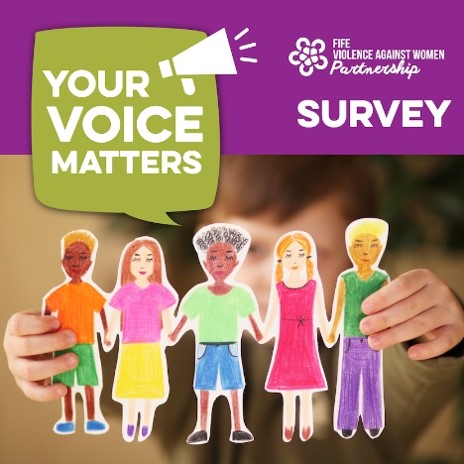
The level of engagement achieved through the pilot demonstrated strong commitment from both professionals and communities. A total of 142 responses were received through the multi-agency workforce survey, while 237 responses were gathered through the public survey, including contributions from people with lived experience. Four women with learning disabilities took part in a dedicated focus group, while individual consultations were undertaken with young people and women who had experienced domestic abuse. Participants were supported throughout the process, with remuneration provided in recognition of the value of their time, insight and contribution.
The pilot has already generated valuable learning for services across Fife. Partners reported increased awareness of the range of support available locally and improved understanding of each organisation's role in responding to violence against women and girls. The findings will also help inform future workforce development and training programmes, ensuring that services are better equipped to respond to the needs of those seeking support.
The learning gathered through the project will directly inform the Fife Violence Against Women Partnership's 2026-27 Bridging Action Plan and support future service planning and development. The findings will also be shared with key stakeholders and decision makers across Fife, helping to strengthen partnership working and ensure future actions are informed by evidence, experience and community need.
This work supports the Plan for Fife priority of Tackling Poverty and Preventing Crisis and contributes to ambitions around reducing preventable harm, improving community safety, strengthening joined-up services and involving individuals more closely in shaping the services that affect their lives. By bringing together partners, professionals and people with lived experience, the project has helped create a more comprehensive understanding of need while supporting a more coordinated response to violence against women and girls across Fife.
Looking ahead, further engagement is planned with women and families who use specialist services, alongside feedback events for both workforce participants and those who shared their lived experience. As recommendations are considered and implemented, future surveys and consultation activity will help measure progress and identify emerging needs. By building on the learning from this national pilot, Fife is helping to shape future approaches to preventing violence against women and girls while ensuring that support services continue to evolve in response to the needs of local communities.