Some cookies used are essential to providing a service, while others help us improve your experience and provide us with insights into how the site is being used.
For more detailed information about the cookies we use, see our Cookies page.
Necessary cookies enable core functionality such as security, network management, and accessibility. You may disable these by changing your browser settings, but this may affect how the website functions.
We'd like to set Google Analytics cookies to help us to improve our website by collecting and reporting information on how you use it. The cookies collect information in a way that does not directly identify anyone. For more information on how these cookies work, please see our 'Cookies page'.
We'd like to allow Social Media cookies to provide a richer experience. These cookies will allow us the ability to list Fife Council tweets and Facebook posts, Google maps, audio clips & Videos on some of our pages. Our videos use Youtube's privacy-enhanced mode.
These cookies allow us to show relevant adverts to the content you are viewing. They also provide the ability to deliver targeted online advertising across other platforms like Facebook, Google, Instagram and the Quantcast network.
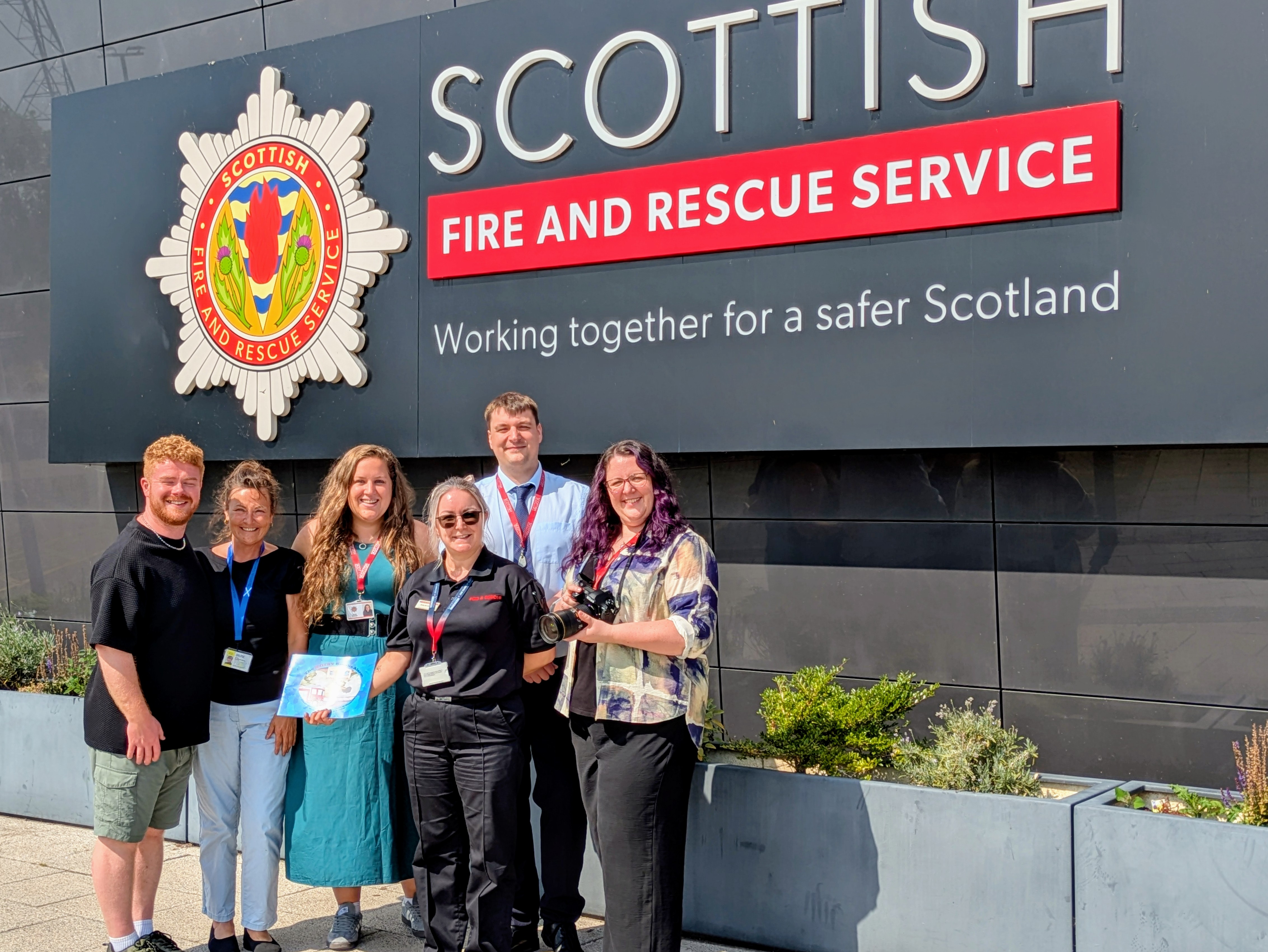
During 2025/26, partners worked together to improve access to fire safety information for children and young people with additional support needs through the development of The Noisy Smoke Alarm. Originally created to support neurodivergent children, the resource was designed to make fire safety messages clearer, more engaging and easier to understand.
The project was delivered in partnership between the Scottish Fire and Rescue Service (SFRS) and Fife Health and Social Care Partnership’s Deaf Communication Team. Building on the success of the original book, the partners identified an opportunity to expand accessibility further by creating a British Sign Language (BSL) version, ensuring that deaf children and young people could also benefit from the resource.
Working collaboratively, the original story was carefully adapted into BSL to ensure it was clear, engaging and appropriate for BSL users. The adapted version was then professionally filmed, with a focus on high-quality visuals and clear signing to support understanding. This approach ensured the content remained inclusive while maintaining the key safety messages in a format that works for different audiences.
The resource has already shown positive early impact. The BSL version has received around 500 views on YouTube within the first eight months, demonstrating strong engagement and helping to extend the reach of fire safety messaging to new audiences. More broadly, the project has helped raise awareness of the importance of accessible public safety information and the role of inclusive communication in protecting communities.
The wider impact goes beyond the initial audience. The book, which has been endorsed by Scottish Autism, provides a valuable tool for explaining fire safety not only to neurodivergent children but also to deaf people and others who benefit from more accessible communication. By improving understanding of fire safety in the home, the project supports earlier intervention and helps reduce the risk of harm.
The initiative directly supports the Plan for Fife priorities of tackling poverty and preventing crisis and community wealth building, as well as ambitions around improving educational attainment, reducing health inequalities and ensuring public services act ‘one step sooner’. By making safety information more accessible, the project helps ensure that more people are able to understand and act on important advice.
Looking ahead, the resource is already being shared more widely, with interest growing beyond Fife. It has been presented to the National Fire Chiefs Council and distributed across the UK, supporting wider adoption and helping to build a more inclusive approach to fire safety education. This ongoing work will ensure that accessible resources continue to reach those who need them most.